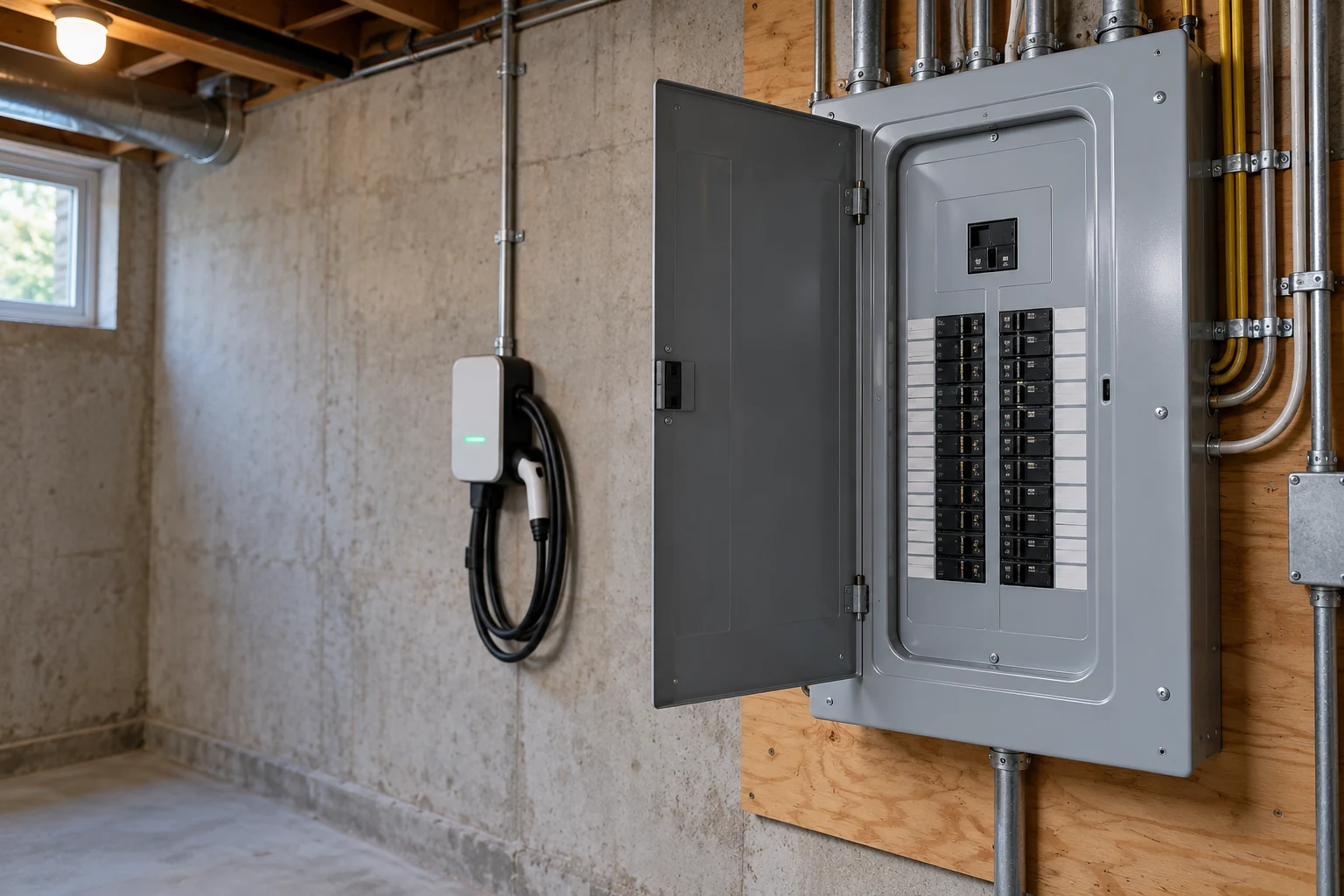
Panel upgrade or load management?
A larger electrical service and an EV energy management system solve different capacity problems. A code-compliant load calculation should guide the decision.
Check capacity before buying capacity
An EV energy management system, or EVEMS, manages charging in response to electrical demand. It may allow charging within an existing service. A panel upgrade can add capacity but may need utility work.
- Homeowners with a 100A or 125A service.
- Households adding a heat pump or other major equipment.
- Owners comparing immediate charging needs and future renovation plans.
Your scope checklist
- Electrical load assessment
- Appropriate circuit and protective equipment
- Cable routing and mounting
- ESA notification process
- Testing and equipment commissioning
- App setup where applicable
- Acceptance documentation and cleanup
Confirm every inclusion in your contractor’s written quote.
What changes the quote?
Your written quote reflects the route, equipment, and electrical work required.
| Installation scope | What drives the quote | Price (CAD) |
|---|---|---|
| Short, accessible cable route | Panel capacity, circuit and mounting | Quoted after assessment |
| Longer or concealed route | Cable distance and finished surfaces | Quoted after assessment |
| Detached garage | Trenching, routing and protection | Quoted after assessment |
| Load management | Device compatibility and control design | Quoted after assessment |
| Panel / service upgrade | Utility coordination and electrical scope | Quoted after assessment |
Common planning questions
Electrical terms, simply.
Amps measure electrical current. kW measures power. kWh measures energy used over time.
A contractor sizes the circuit and wiring for the equipment, continuous load, installation conditions, and applicable rules.
Estimate charging time ↗Compare the two paths
| Consideration | Load management | Service upgrade |
|---|---|---|
| Purpose | Control EV demand within available supply | Increase service capacity where feasible |
| Charging behaviour | May pause or reduce charging | Depends on final design and available load |
| Utility involvement | Depends on scope | Usually needs utility coordination |
| Future loads | Assess device and system limits | Assess heat pumps, cooking and other planned loads |
| Cost and timing | Site-specific quote | Site-specific quote; utility fees set by utility |
OEB connection guidance ↗ · Open the panel planning checklist ↗
Your installation journey
Tell us about your space
Choose your property type, parking location, and panel size.
Review the electrical plan
A contractor checks capacity, cable routing, and equipment.
Schedule the installation
Confirm the written scope, notification, and installation schedule.
Plug in with confidence
Complete testing, app setup, and acceptance documentation.
Questions before you start?
Do I need a Level 2 charger at home?
Level 2 uses a dedicated 240-volt circuit. It can suit drivers who need more overnight energy than a regular outlet provides. Compare your daily driving, available charging time, and vehicle charging limit.
Can I install a charger with a 100A panel?
Possibly. Panel size alone cannot establish capacity. A licensed electrical contractor must assess your electrical demand. Load management may be an option before a service upgrade.
How much does installation cost?
Every installation is quoted for its electrical scope. Cable length, installation route, equipment, panel capacity, and site conditions affect the quote. Request a written scope before accepting a price.
Who should carry out the electrical work?
Hire an appropriately licensed electrical contractor. Verify the business and licence directly with ESA. ECRA #7014495 is the licence number shown for this service.
What is an ESA notification?
It is the electrical work notification filed with the Electrical Safety Authority. The contractor should explain the inspection process and provide the applicable acceptance documentation.
Does every EV use the same connector?
No. Check your vehicle inlet, charger connector, and any adapter requirements with the vehicle and charger manufacturers. Avoid selecting equipment from the badge alone.
Do I need condo board approval?
Condo installations require a building-specific approval process. Start with your property manager and the Condominium Authority of Ontario guidance. This information is general and is not legal advice.
Where do you install residential chargers?
Our residential chargers are installed inside attached or detached garages, rather than on the exterior wall of the home. The site assessment confirms the interior mounting position and cable route.
Keep exploring
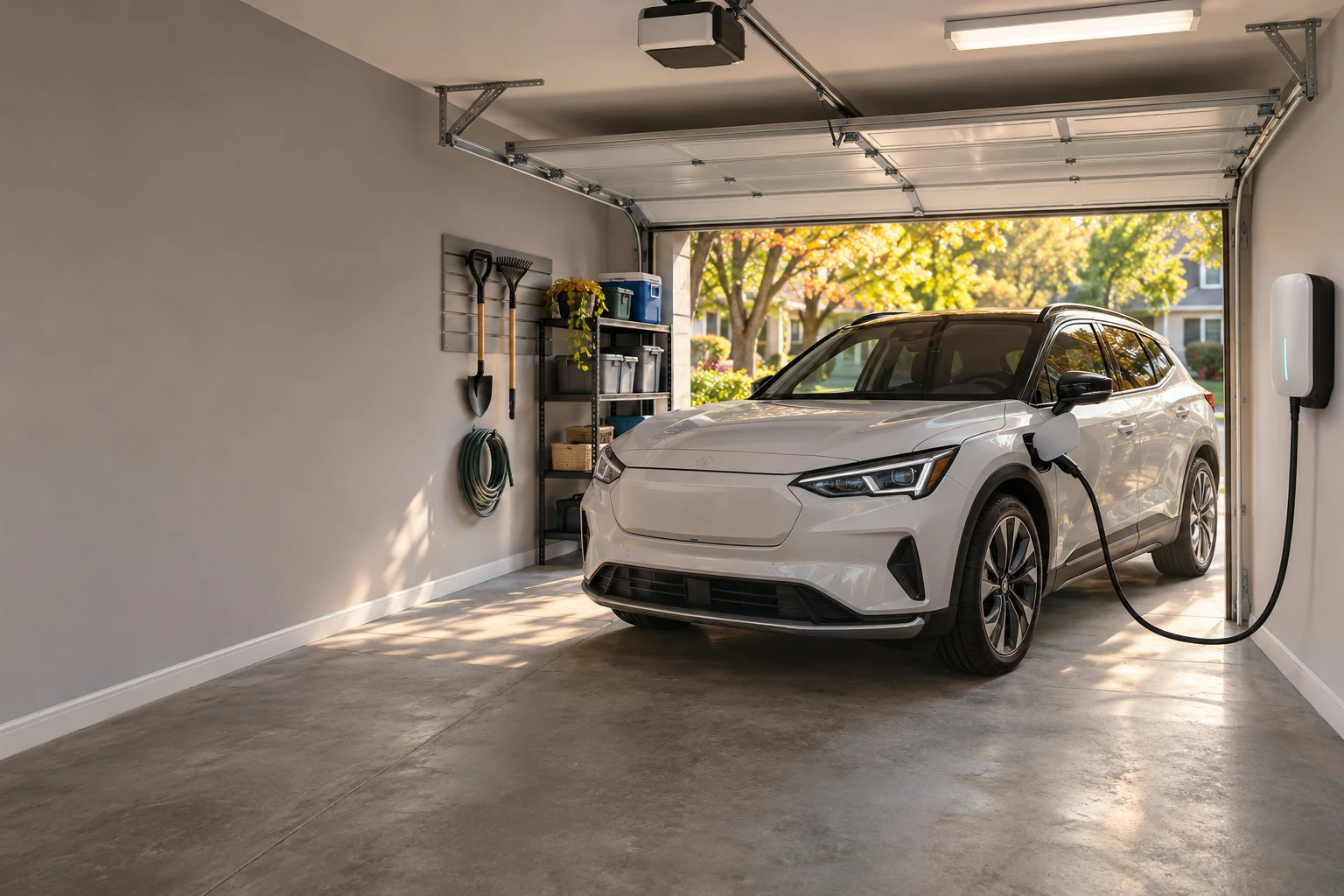
Home charger installation
A dedicated charging setup for your everyday drive.
Scope-based quote↗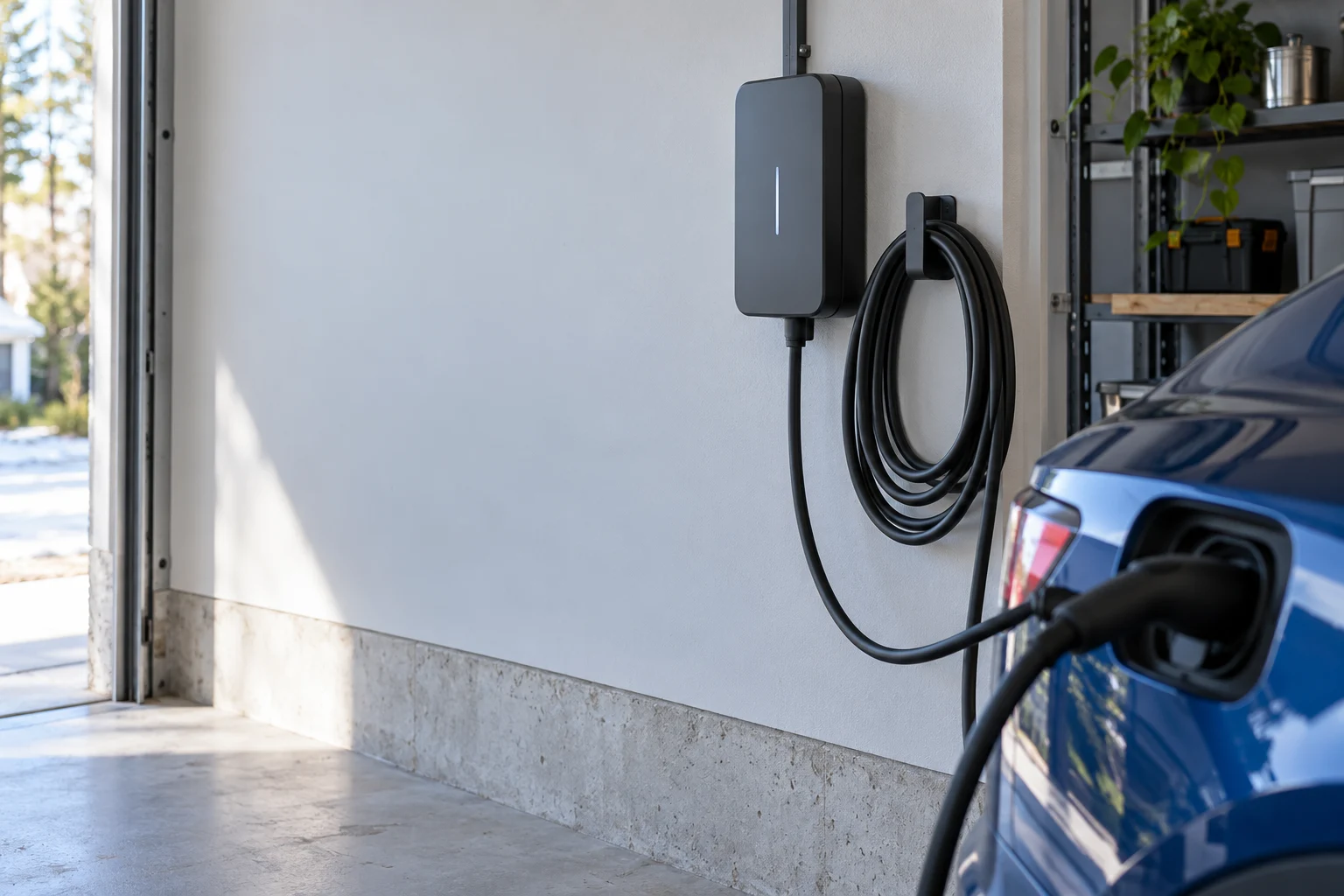
Level 2 charging
Understand your circuit, charging power, and overnight needs.
Scope-based quote↗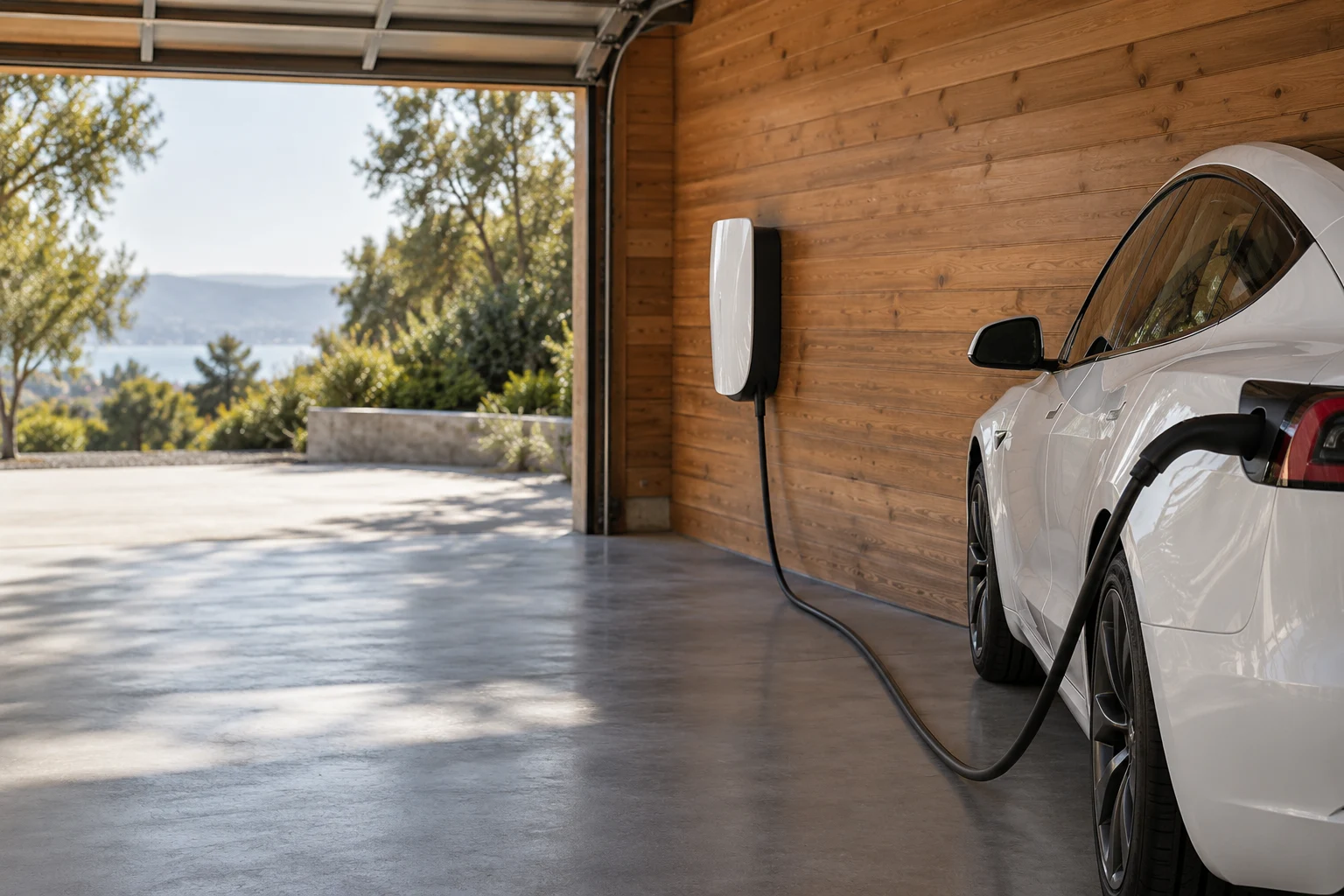
Tesla Wall Connector
Plan the equipment, connector, and electrical connection.
Scope-based quote↗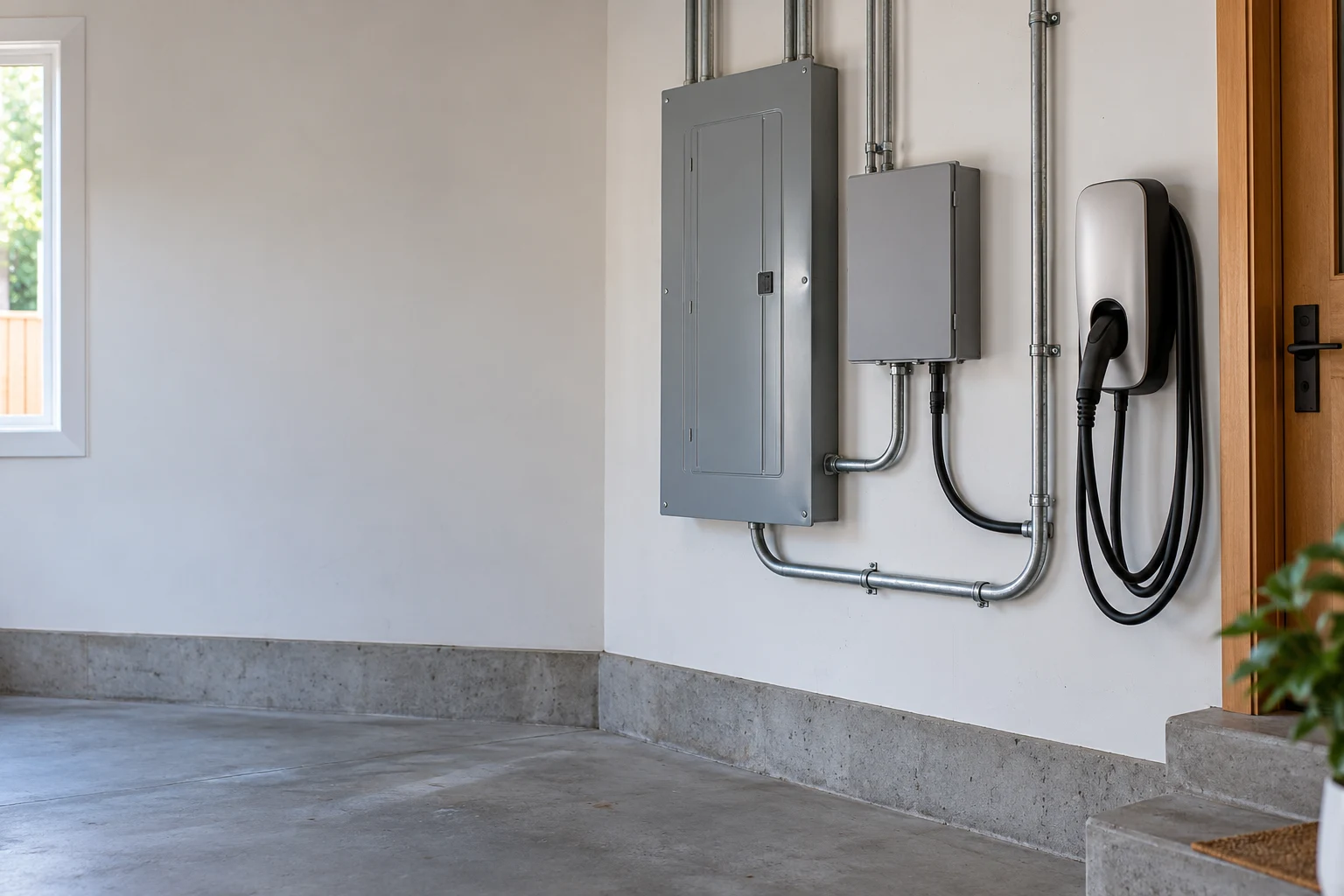
Smart load management
Explore an alternative when available capacity is limited.
Scope-based quote↗Example service-area pages
Plan your installation
A few details today. A clearer path to charging tomorrow.