Fleet depot EV charging
Fleet charging should reflect route distance, energy use, depot dwell time, and vehicle readiness. A phased plan can align infrastructure with vehicle procurement.
Start with the duty cycle. Design for the next departure.
Build your assessment around the operational priorities below.
- Vehicle return times and departure priorities
- Utility capacity and peak-demand management
- Uptime, maintenance and operational contingency
Level 2 or DC fast charging?
Level 2 can suit longer parking sessions. Vehicle and equipment limits determine delivered power.
DC fast charging sends direct current to the vehicle. It can require more substantial utility and site infrastructure.
Understand DC fast charging ↗From site audit to ongoing operation.
Site & utility study
Assess demand, parking layout, service capacity, and utility connection requirements.
Design & delivery
Confirm engineering, equipment, approvals, construction, and commissioning.
Software & support
Define access, payment, reporting, maintenance responsibilities, and support coverage.
Explore your sector.
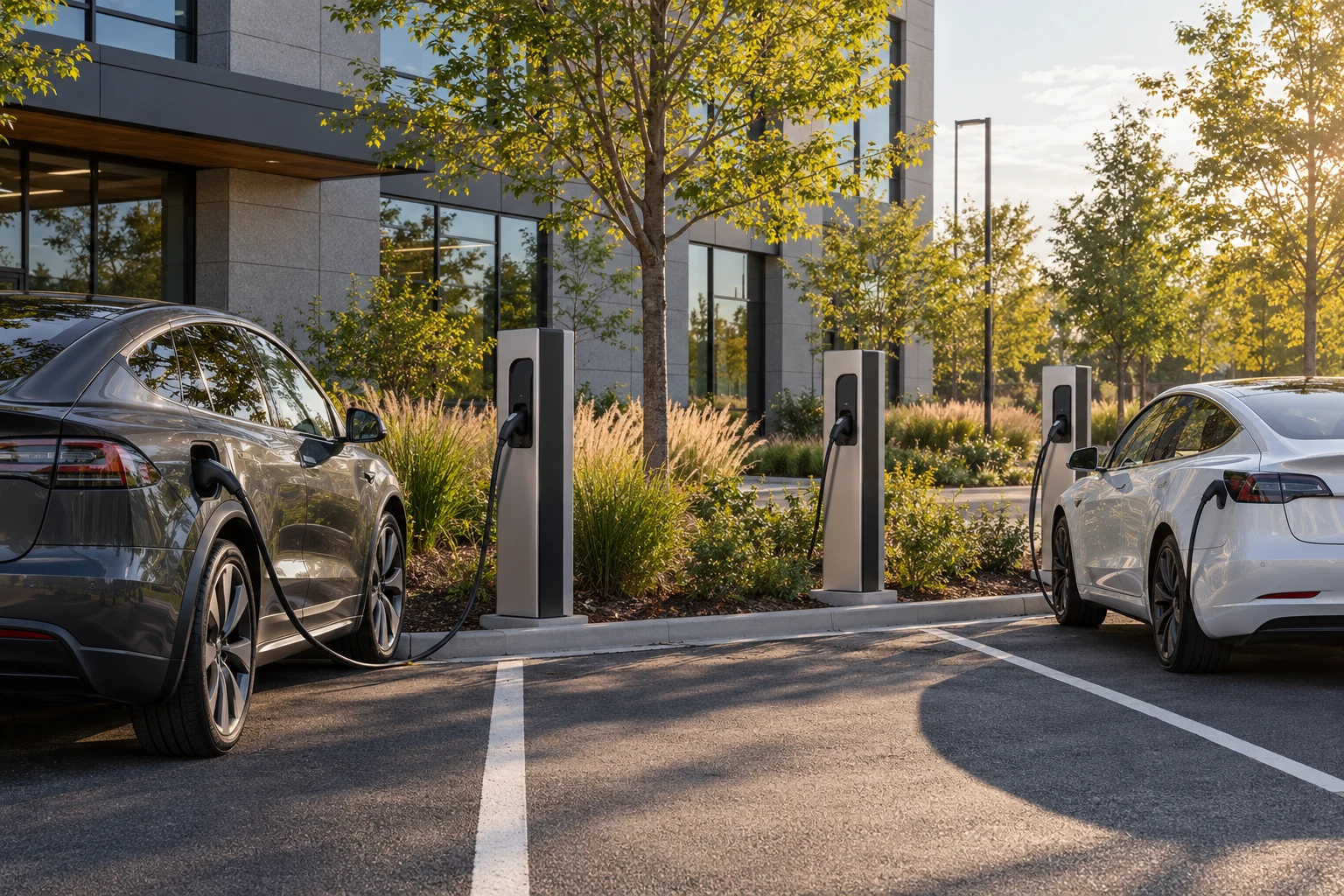
Workplace EV charging
Plan around employee parking times, visitor access, and company vehicle needs.
Explore ↗
Retail & hospitality EV charging
Match charging to how long guests stay.
Explore ↗
Multi-family & rental EV charging
Build a practical plan for shared parking.
Explore ↗
Fleet depot EV charging
Start with the duty cycle. Design for the next departure.
Explore ↗Official funding resources ↗ · Utility connection procedures ↗
Let’s start with the site.
A useful audit brief includes parking capacity, desired charging stalls, vehicle needs, and expansion plans.
Support should be defined in writing.
No response-time or uptime commitment is published before the actual maintenance agreement is supplied.
Can we charge drivers for electricity?
Payment and access depend on the chosen equipment, network provider, site rules, and applicable requirements. Confirm pricing, transaction fees, tax treatment, and support responsibilities.
How do we estimate payback?
Use realistic utilisation and delivered energy assumptions. Include electricity, network fees, maintenance, payment processing, and demand charges. Our calculator is an illustrative starting point.
Can we expand later?
A phased design may reserve pathways and capacity for later stalls. Confirm civil works, utility constraints, and networking before installing the first phase.
Plan for today. Leave room for tomorrow.
A few details today. A clearer path to charging tomorrow.